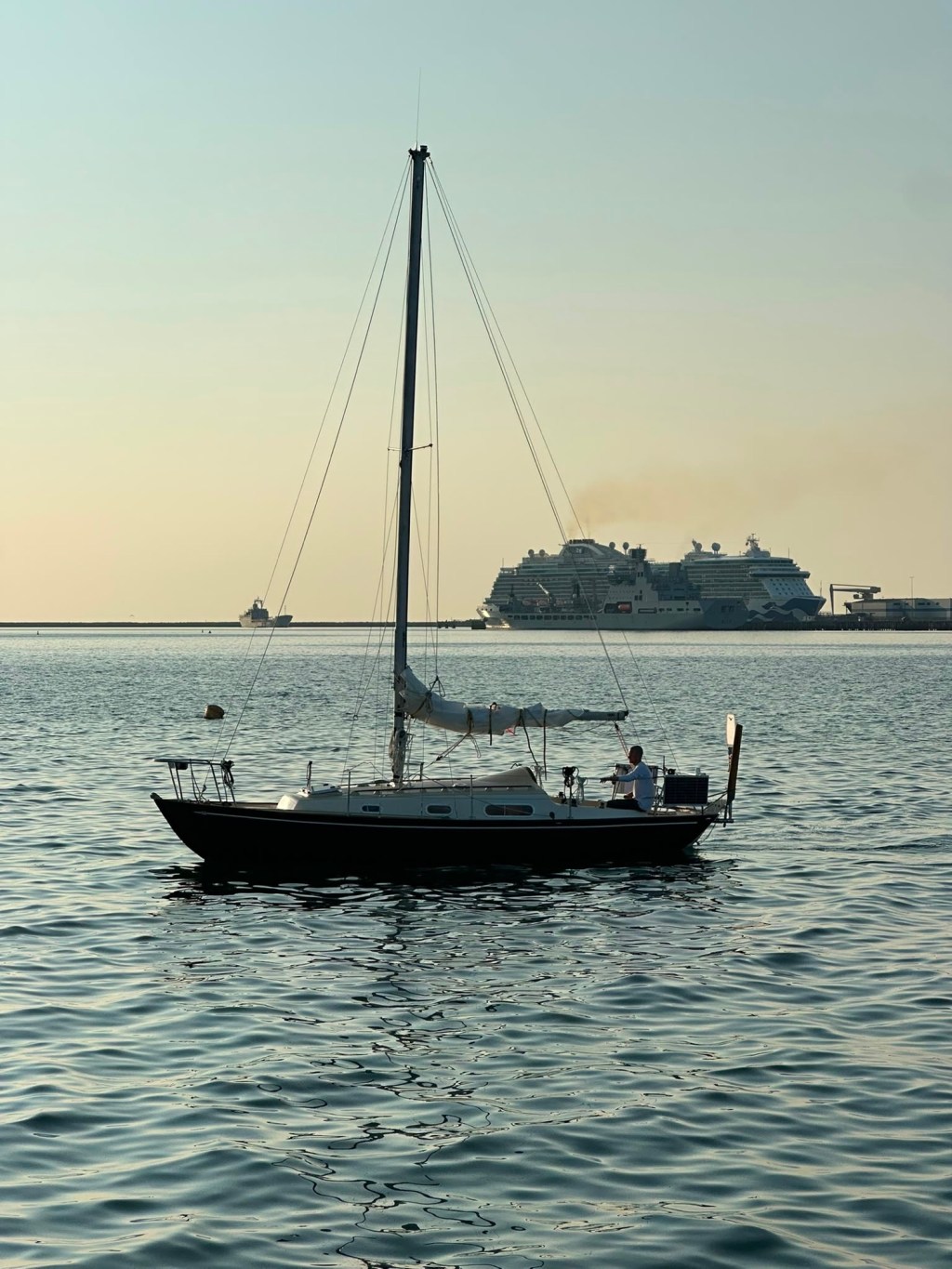
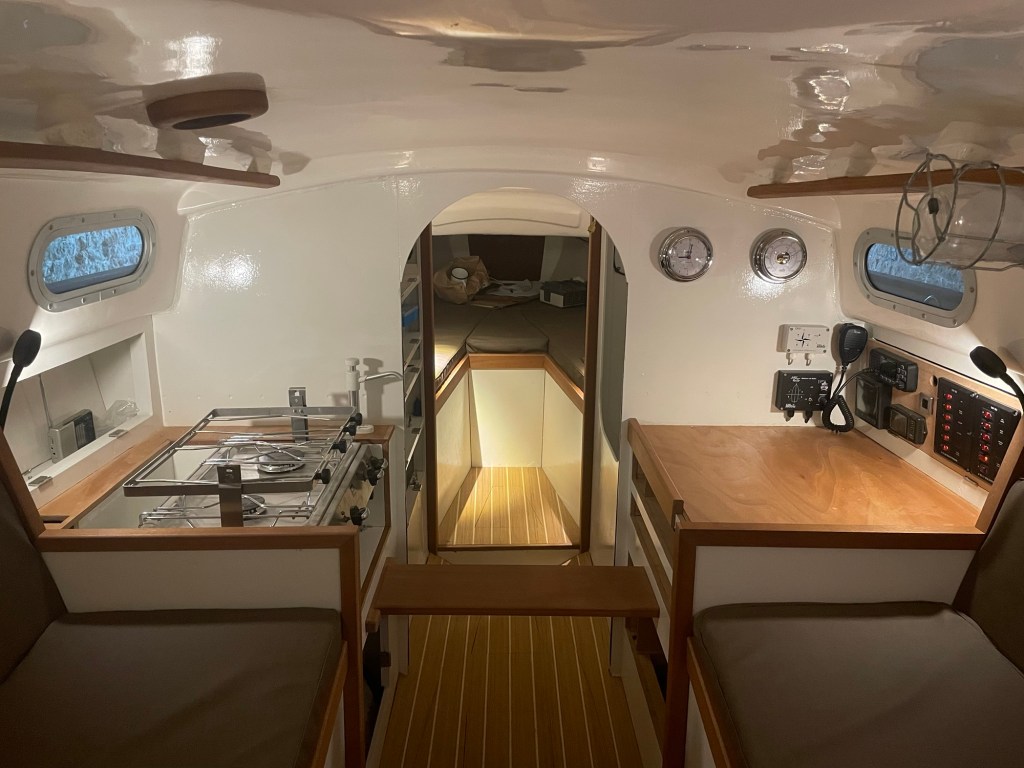
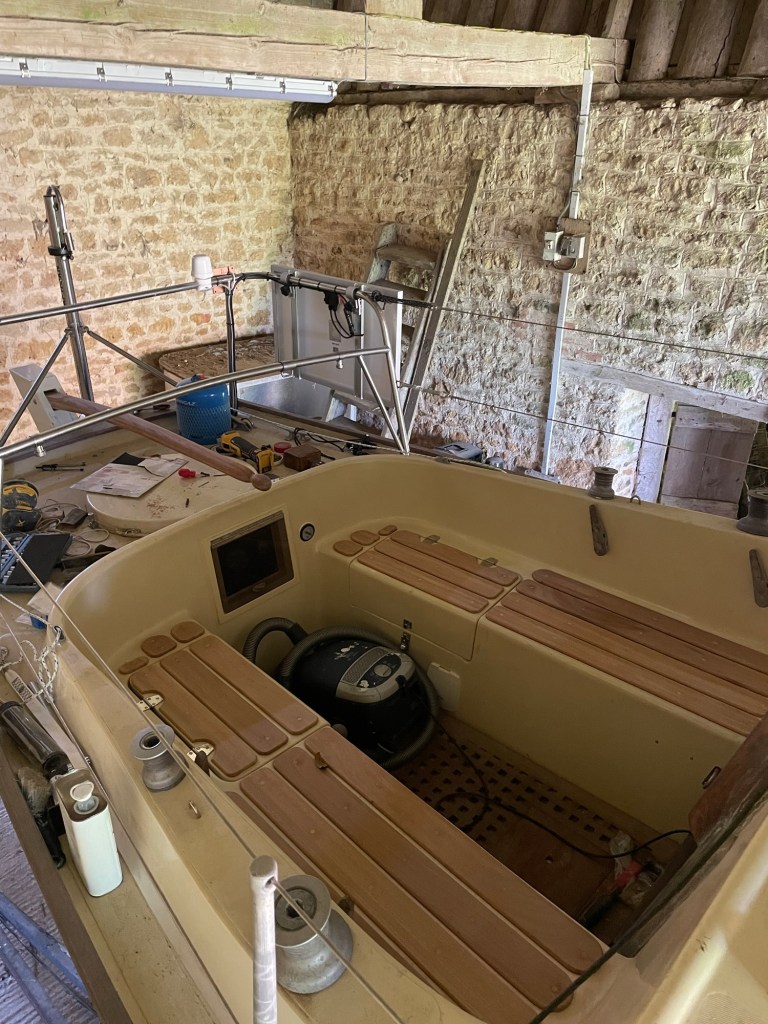
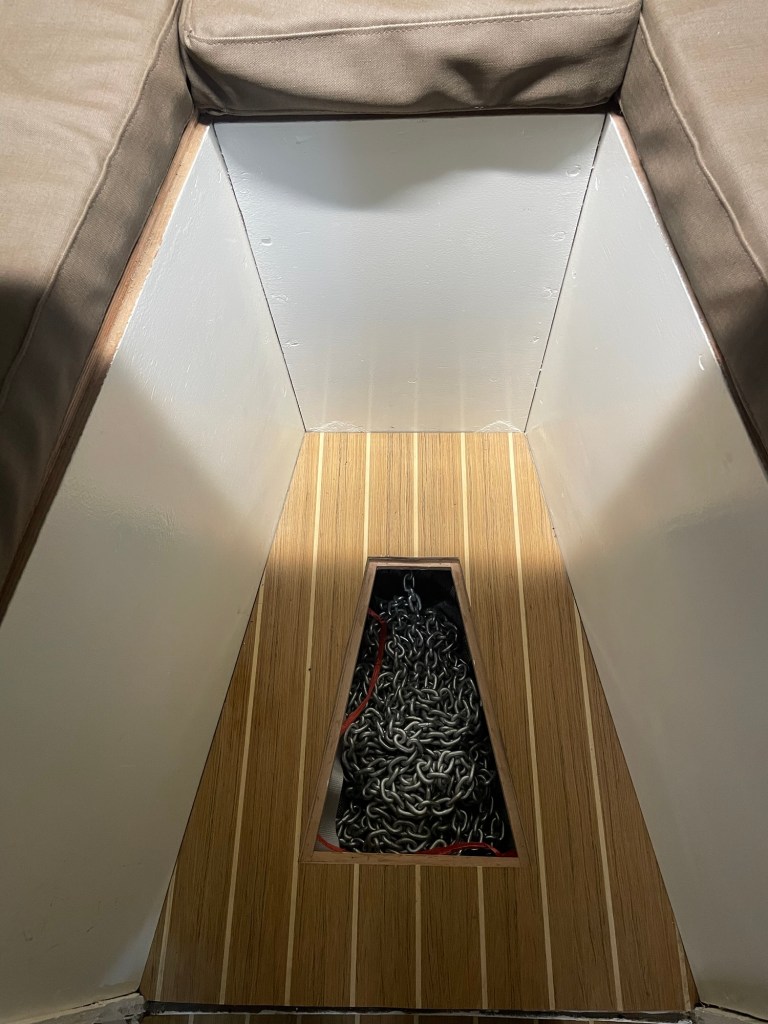
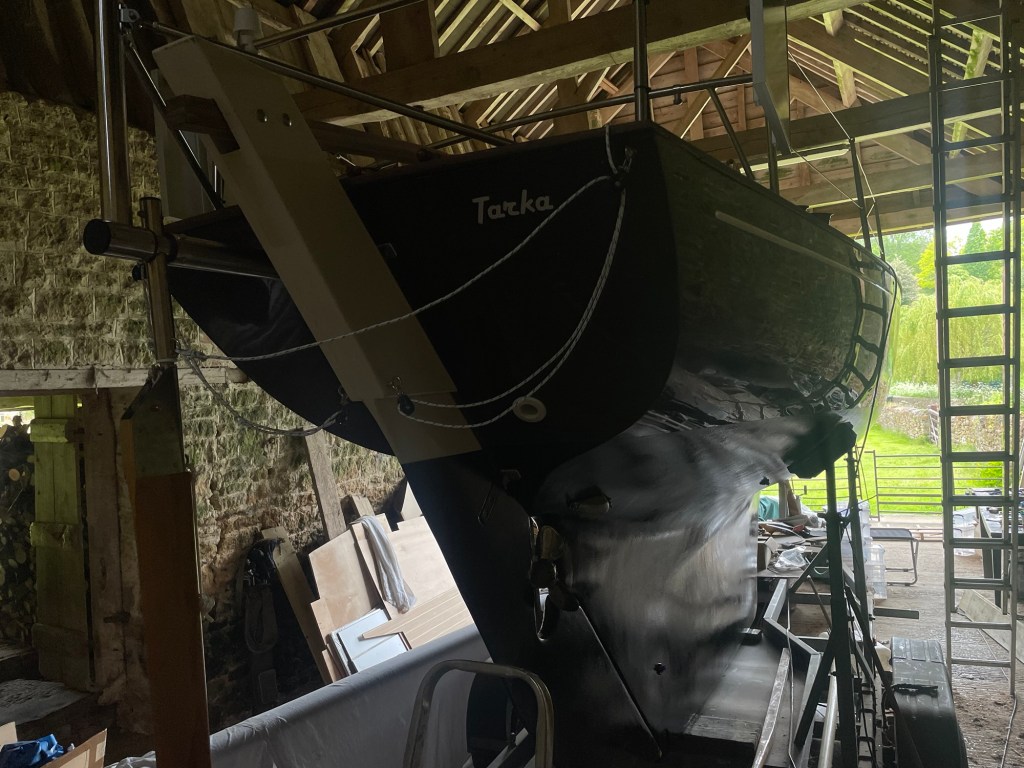
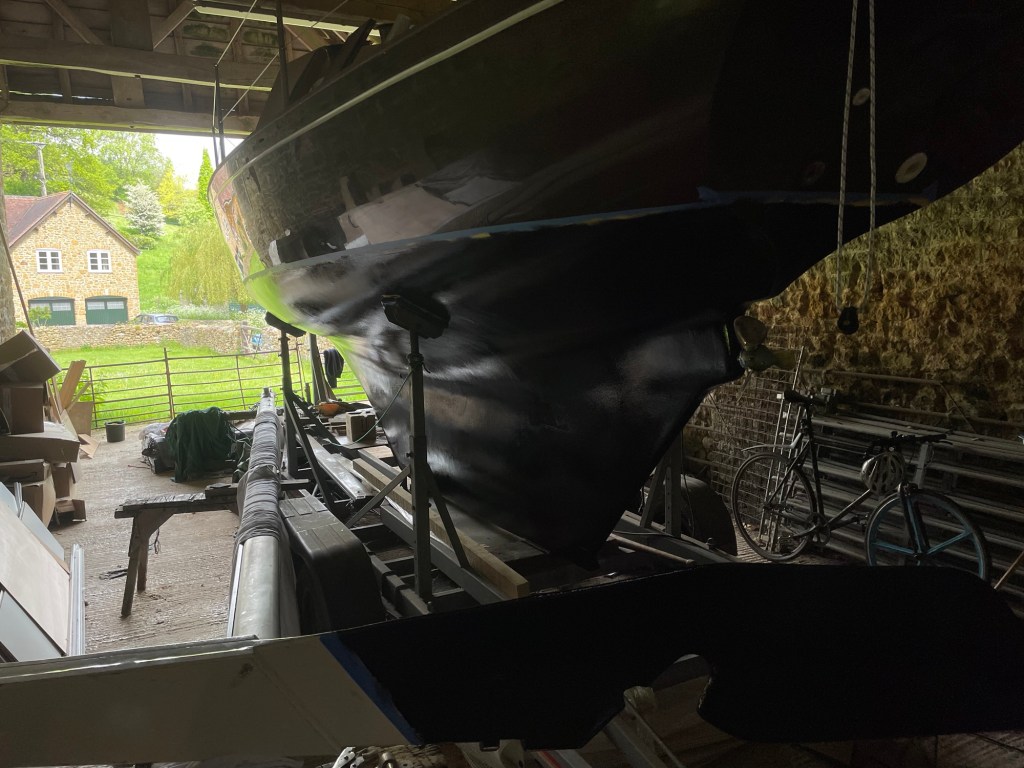
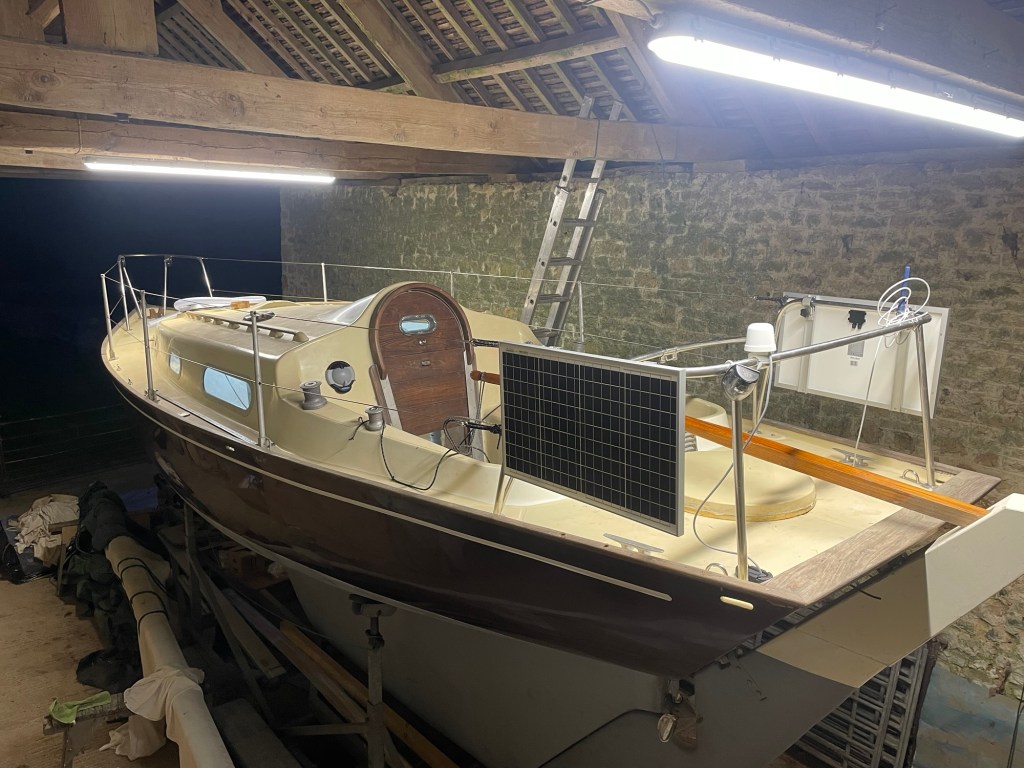
Following the refit and subsequent voyages of “Tarka”, a 1977 Jeremy Rogers Contessa 26.

Showing off Tarka’s solid glass construction.

Blog

  • The Work Begins

    Having finished my degree and the furniture making course in Lyme Regis, my calendar is clear for an intensive nine-month burst of boatwork with the aim of getting afloat by May/June 2026. From the conception of my plans to the present day, they have consistently had to take second place to other commitments and responsibilities, so it feels amazing, and is a huge privilege to be finally able to dedicate my whole self to the project.

    Since coming back from Lyme I’ve been spiling, cutting and fitting four bulkheads, positioning them square to everything else and grinding the last remnants of old gelcoat (so the bulkheads can be bonded to bare fibreglass).

    Spiling aims to capture the imperfect curve of the hull side on a ply frame. This is then transferred to a solid ply template, and then to the final 12mm marine ply sheet which the bulkhead is cut out of.

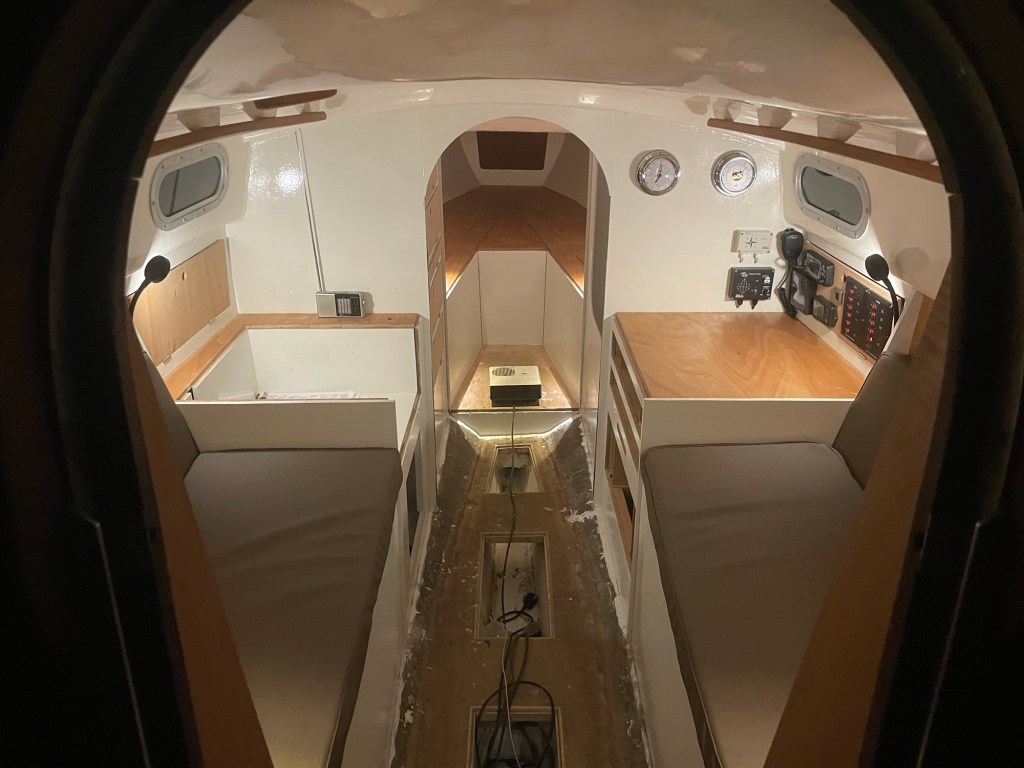
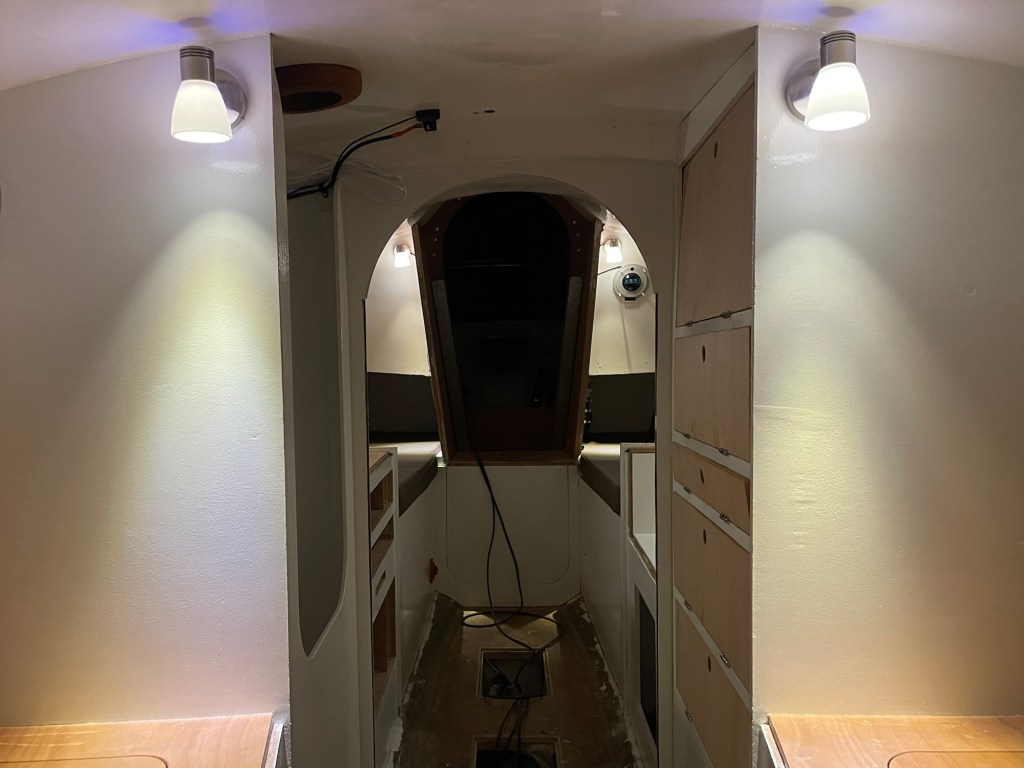
    When bonded in with fibreglass, the bulkheads form the structural skeleton of the boat and provide surfaces which the four sleeping berths can be bonded to; thus completing the rough interior installation. The job wasn’t particularly difficult but often required one thing to be held in place while measuring or adjusting something else. This was made much easier by an extra pair of hands; my friend Nick came to help for a week.

    One unexpected job was to grind away a narrow channel of gelcoat on the coachroof where the forward bulkheads meet the ceiling. This required introducing the concept of precision to the angle grinder, which when added to working in a confined space with mask, goggles and headphones on, and above one’s head, turned out to be quite a job.

    I’ve also been designing the rest of the interior to make the best use of space and have enough drawers and lockers so all my worldly possessions don’t fly across the cabin if the boat was to be knocked down…

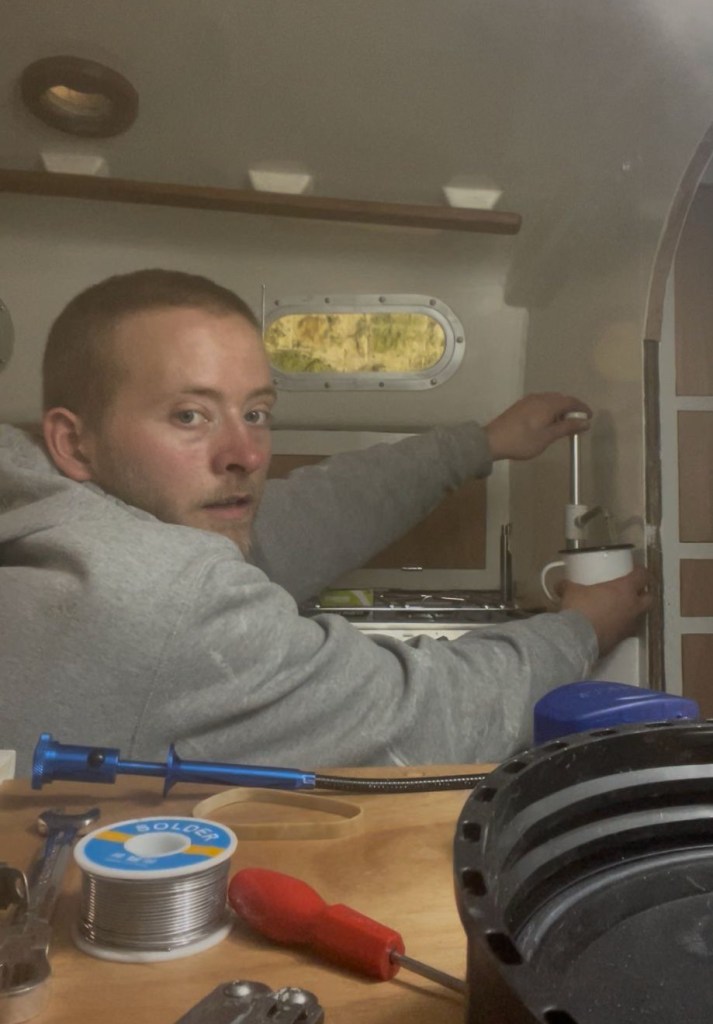
    Put to work!
  • Preparing for the interior

    I spent last week making some final preparations to the hull before fitting the interior. This involved adding “stringers” which spread the load of the interior fittings on the hull sides and add stiffness to the hull. They are normally bonded to the hull when it’s still in the mold, but as my boat was stripped when I bought it, they had to be retrofitted. Below shows the steps I took.

    It began with cutting and shaping polyurethane foam sheets into long thin strips. I spent day one cutting these out by hand, but after waking the next day, to my shoddy workmanship of the previous, I decided that shaping them with sandpaper was the way forward.

    Then I determined the exact position these foam strips were to take on the hull, so that the bunks would be exactly horizontal and the bulkheads vertical. For this I used a laser-level; I could’nt use a spirit level, nor the laser-level’s built-in gimbles, because Tarka is sitting on her trailer at a slight angle.

    Next I bonded the foam to the hull with thickened epoxy (overkill I know), and sealed with unthickened epoxy, in order to minimise the chance of voids forming under the glass as its an open cell foam. The foam adds no strength or rigidity in itself, but provides a form over which to lay the structural material, i.e. the fibreglass. Wood is sometimes used instead of foam but weighs more and is more time consuming to shape to the exact curve of the hull. I wetted out and rolled on 4 layers of glass (from first to last): 1x300g/m^2 powder bound csm, 2x600g/m^2 biax and 1x300g/m^2 biax. This was done for the forward and aft partial bulkheads, and the forward stringers. Unfortunately I ran out of time at that point and will have to return to the boat for a weekend to finish the job for the aft stringers. The gallery has been updated…

    Once I have completed the furniture making course I’ll be working full-time on Tarka to get her afloat by next summer. The remaining work is summarised below:

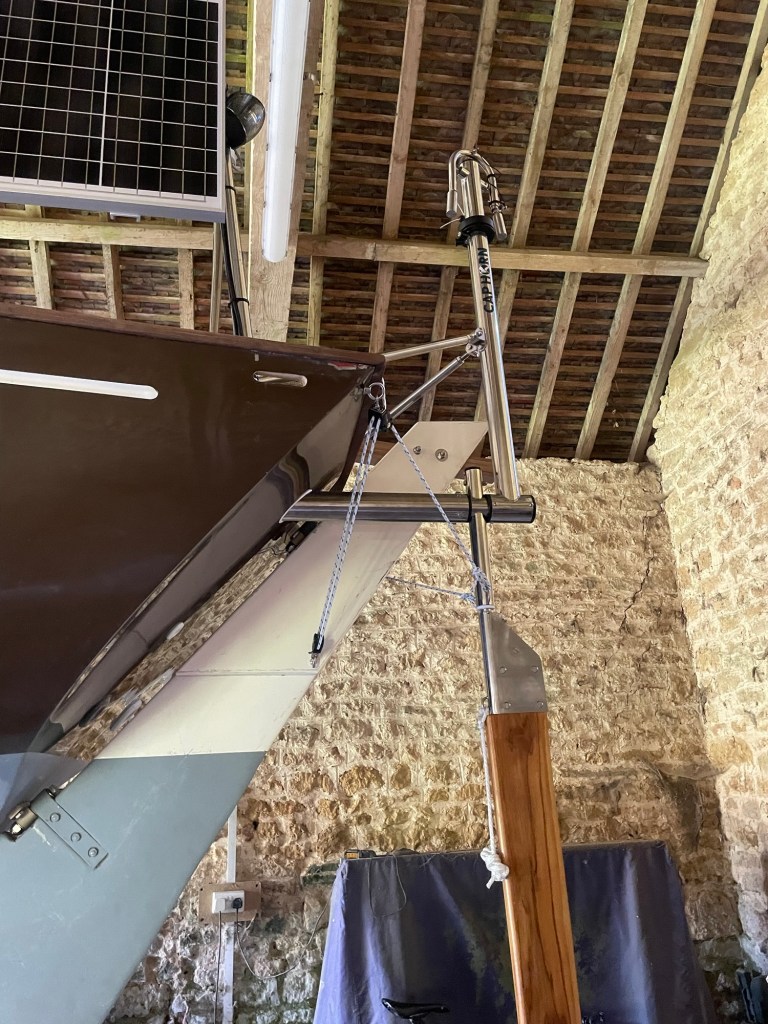
    • Fitting the self-steering windvane.
    • Designing, cutting out and fitting the partial bulkheads, galley area, chart table/workbench, hanging locker, berths, the many storage spaces aboard, and various miscellaneous fixtures.
    • Finalising the standing and choosing/sourcing the running rigging.
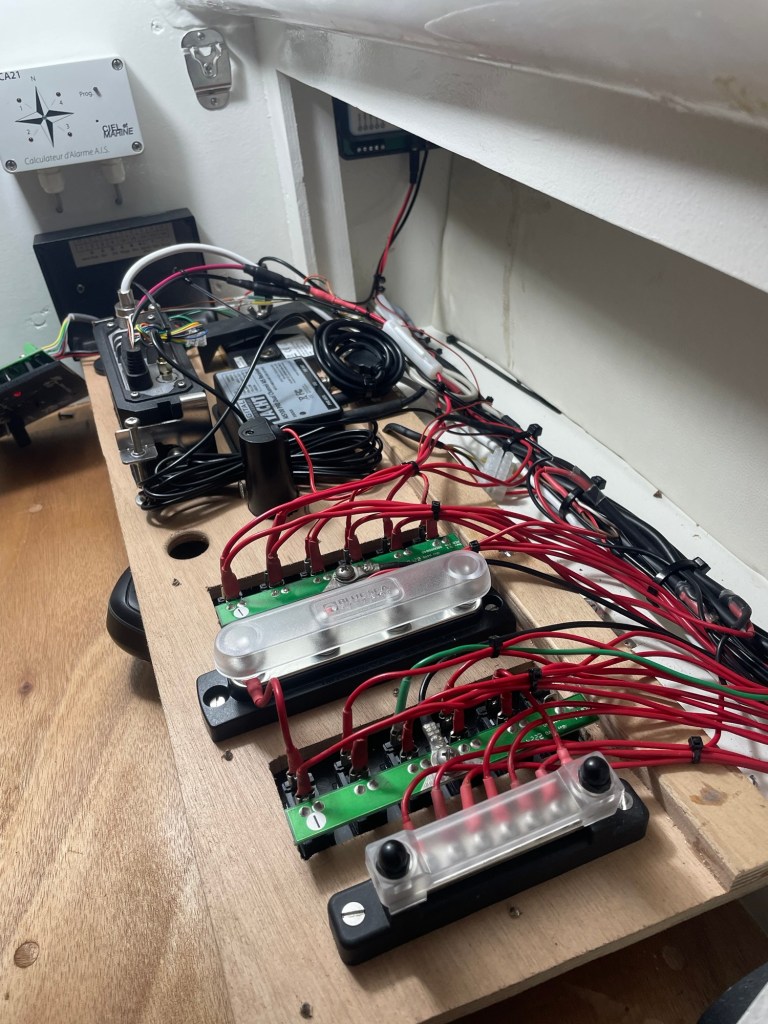
    • Choosing electrical navigation instruments, lights, communications instruments, and other electrical fittings, thus establishing my energy requirements.
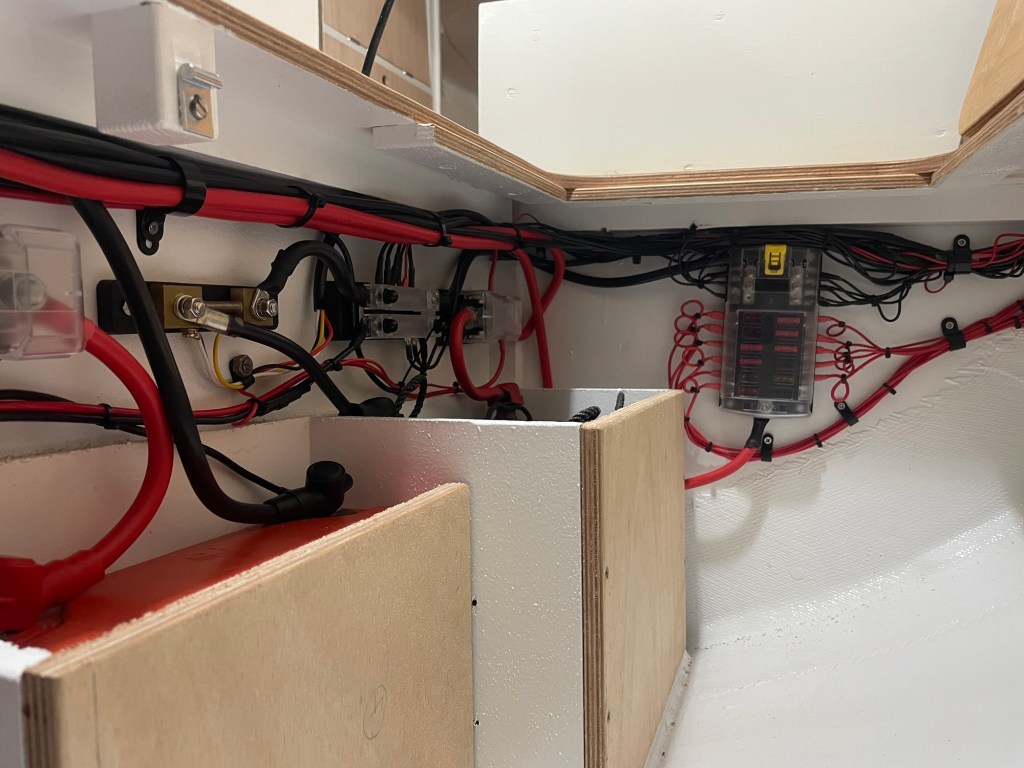
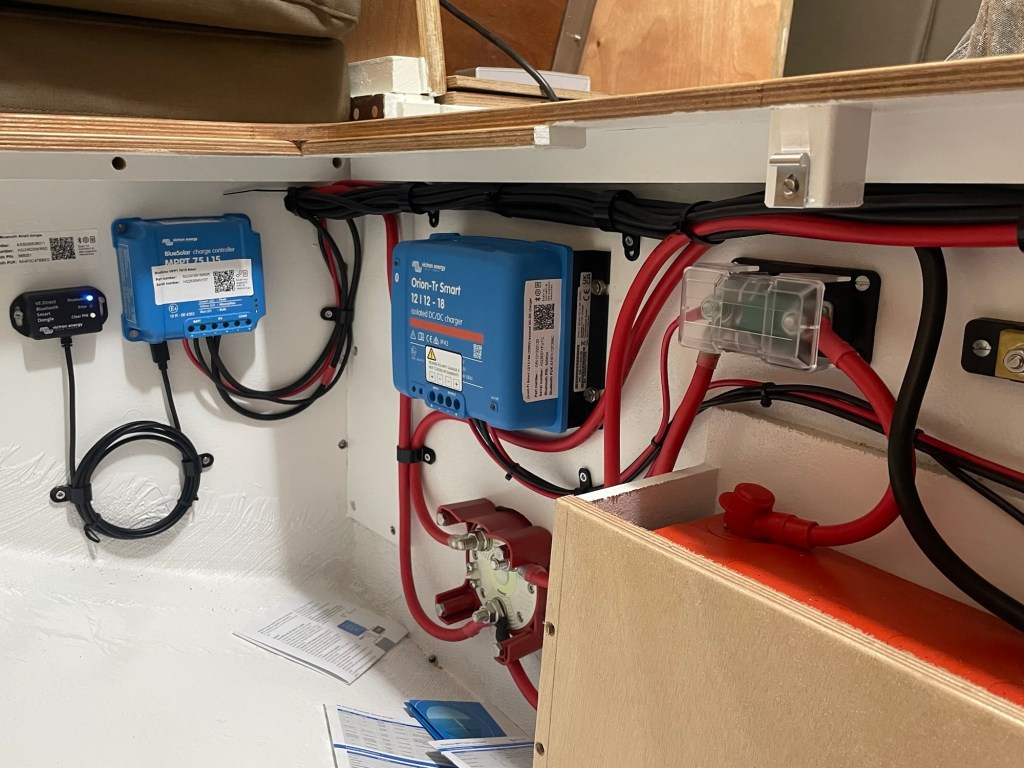
    • Choosing and fitting a straightforward reliable electrical system to support these requirements.
    • Fitting a hand pump to my water storage system (jerry cans).
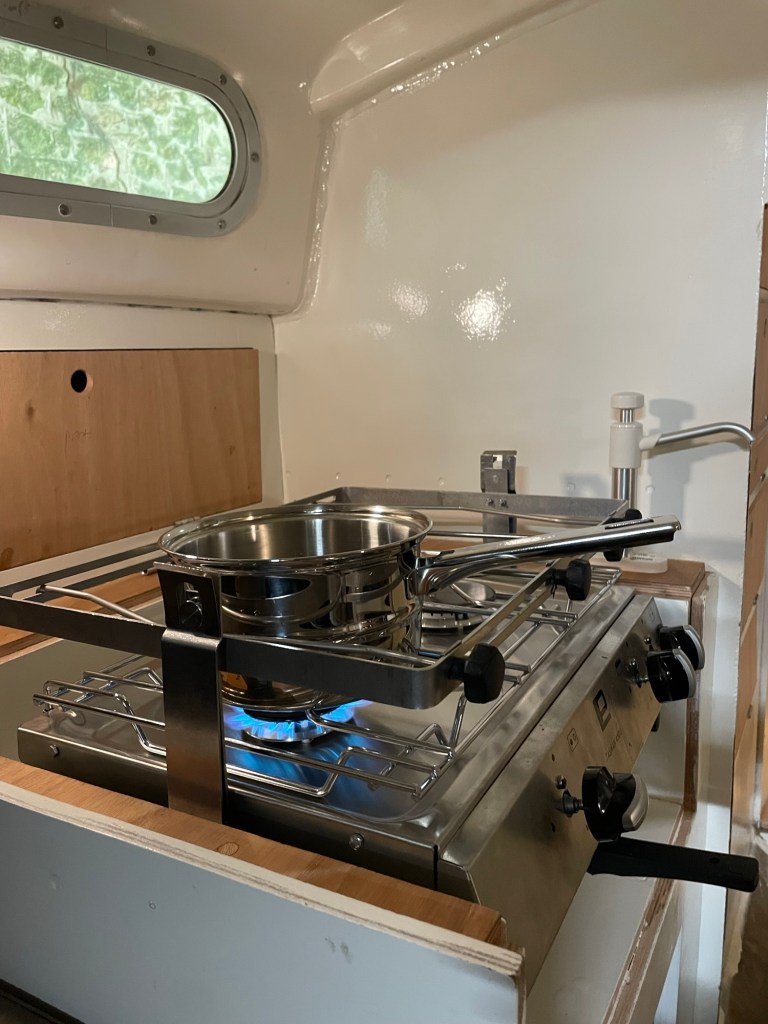
    • Fitting the gas cooker and small gas locker with bottle.
    • Choosing dimensions, designs and materials of ground tackle, bilge pumps, safety equipment, interior upholstery.
    • Getting the engine ready for action.

    In other news, our trio ‘Morse Contact’ has released its debut (self titled) EP. This features Cameron Scott on euphonium, Luke Purbrick on guitar, and me on drums. We showcase a couple of tunes we’ve been playing together over the last 18 months and include a few of my own! (“The Opener, “Without Expectation” and “The Raging Bull”). Thanks to Luke, we had the incredible opportunity to record at Abbey Road Studios. We are all very happy with the result so please have a listen if you’re interested!

    The EP can be found via the link below and is not available on other mainstream streaming services.

  • So far…so good.

    I’m currently about half way through the refit (fingers crossed!), where most of the jobs on Tarka’s exterior have been seen to, and I am preparing for the for the fabrication and installation of the interior starting in August. My learning over the past 10 months has been verging on obsessive (no surprise to those who know me), whether it be in the techniques and fundamentals of GRP, wood, or metal work, the basics of electrics, plumbing, rigging, sailmaking, radio operation, first aid, and victualing or a general ongoing study of meteorology, astronomy, and modern and traditional coastal and offshore navigation, (the list goes on). The list of subjects and skills required to refit and pilot a small sailing vessel solo for an extended period at sea is truly staggering, which for me is a large part of the attraction – a ‘school of life’.

    My time therefore, has had to be meticulously divided between this personal study/boat work, staying on track with ‘school’ work, gigging and private music teaching, pizza delivery shifts and local handyman work, and my struggling social life…not that I’m complaining.

    Much of my personal study has consisted of reading. This includes works by author/sailors: Claud Worth, Bill Tilman, Joshua Slocum, Vito Dumas, Bernard Moitessier, Sir Robin Knox Johnston, Francis Chichester, Sir Alec Rose, Miles Smeeton, John Guzzwell, David Lewis, Eric Hiscock, John Kretschmer, Hal Roth, Robin Lee Graham, Tania Aebi, Sebastian Smith, Nick Jaffe, Peter Hancock and Roger Taylor.

    I found that in each of the books it was the sailor’s attitude in the preparation and eventual execution of the passages which was most revealing; passages in similar vessels, through similar conditions, and waters, differed enormously due to the attitude of the skipper. It is this attitude or outlook that is most important to take heed of, more than any single decision or piece of equipment on board, though taking influence from both would obviously be preferable. I’ve also found invaluable insights from official texts, such as “Ocean Passages for the World” and “The Mariner’s Handbook”(1960), “Reeds Ocean Navigator” (3rd edition), and “Heavy Weather Sailing”. (Please do send me any links for worthwhile reading material!)

    The most unexpected but essential qualification as a result of the project thus far has been a ‘phd’ in logistics and relationship management. Moving the boat the first time, from Lymington to Lowestoft, involved organising the transport and making sure that both sides had all the necessary information and were present on the day. I spent the next few months running around the yard asking ‘silly’ questions and requesting the use of tools. After completing the RYA Yachtmaster theory course (Hamble), first aid, and Marine Radio SRC, I made my way to the Solent for the Offshore Yachtmaster prep week and exam. This was a real test of relationship management as it became clear that working successfully as a team was crucial for our success in the exam. The winter months involved more work, where the logistical challenge lay in layering up for cold days and even colder nights in the yard.

    Moving the boat for the second time, has been the greatest challenge to date. I undertook extensive research into where best to keep Tarka and how best to move her there. Investing in a 2nd hand yacht trailer and having her towed to the barn in Somerset became the obvious choice (though not an easy sell). This process involved finding and organising a crane to lift her onto the trailer (introducing the “Iron Fairy”), locating a reasonably priced 4×4 to tow her, and having people on both ends to manage the moving. I’m aware these hurdles may not seem that ‘groundshaking’ to some (perhaps more experienced) readers, but for a first timer (and a young one), managing these problems myself has been an education in and of itself.

    So, a summary of the work completed in rough chronological order:

    (Each bullet point details a particular job, which ranges in time and effort from 15 minutes, to a week or more. Work has been completed in an order only arranged by my skill set at a given time, and many jobs involved backtracking as I was ‘learning on the job’…)

    • Remove v-berth insulation lining.
    • Fill chainplate holes with epoxy – for later rebedding.
    • Enter the world of gelcoat colour matching…
    • Fill coachroof holes and gelcoat.
    • Remove teak cockpit instrument backplate and fill holes behind and gelcoat.
    • Fill holes in side decks and gelcoat.
    • Repair cracks, holes and gouges in cockpit – fill and gelcoat.
    • Fit cockpit sole, and refit inspection covers.
    • Re-fit teak toerail plugs.
    • Drill out rivets in curtain rail.
    • Temporarily reinforce v berth with glass to facilitate sleeping.
    • Strip the interior of ancient wiring – to be replaced.
    • Replace cockpit locker hinges and locks.
    • Fit aft locker latches – Brighton fasteners.
    • Polish cockpit and coachroof gelcoat – getting 50 years of grub out.
    • Refit coachroof mushroom vents and aft vents.
    • Refit anchor chock.
    • Service Blake’s seacocks.
    • Fill all interior holes (from curtain rails, wiring, fittings etc….), and subsequently gelcoat and polish to shine!
    • Sand and oil teak companionway, toe rail, anchor chock and cockpit grating with Owatrol.
    • Service cockpit winches.
    • Sand and fit chain pipe.
    • Clean up messy sikaflex jobs.
    • Service mast winches.
    • Epoxy cabin sole down to hull.
    • Remove deck cleats, wet sand and polish.
    • Replace bolts in stanchion bases and add penny washers.
    • Replace bolts in bow roller fitting.
    • Rebed genoa tracks with penny washers and new bolts.
    • re-bed cockpit winch bases and Tufnol cleats and add penny washers and new bolts.
    • Refitting cleats: Fabricate marine ply backing plates. Seal backing plates with epoxy, fit into position with epoxy (+colloidal silica), and glass over with 1x300g biax, 2x 600g biax, 1x300g biax. Re drill holes bed cleats in with Sixaflex.
    • Replace U-bolt chainplates with new larger ones from Rogers – and fit.
    • Refit push and pulpit with new bolts and large penny washers through rebedded holes and fit mousing lines through – for electrics.
    • Fit new forward hatch.
    • Remove corroded masthead sheaves.
    • Drill out rivets and remove mast cleats.
    • Remove aluminium bolt rope track to make way for tidesmarine low-friction track.
    • Remove mast roller boom fittings.
    • Clean inside of mast track.
    • Order new set of sails and mast track from Sanders.
    • Initial fit of rudder – (as fittings were backwards) – decided to lay more glass over the inside area to seal, and drill new holes through transom.
    • 2nd fit – (dry fit) of rudder – put fittings right way round and everything lined up, now with extra strength!
    • Order Cape Horn Windvane from Yves Gelina, and give order measurements according to placement and intended size of vane…
    • Fit Tidesmarine mast track – not screwed in yet as will wait for other fittings.
    • Remove remaining original mast fittings and wet sand mast to clean up.
    • Strip mast of all stays and shrouds – to be sent off.
    • Service other mast winch.
    • In conversation with Allspars regarding standing rigging, mast sheaves, mast climbing steps, below-deck forestay support strop.
    • Take V-berth out as wasn’t bonded in properly… etc.
    • Decide on number of mast climbing steps. – 12 (including possible 1 spare)
    • Take “Hot Chocolate” vinyl off.
    • Take spreader end plates off and clean spreaders and plates.
    • Remove forward bulkhead (to be replaced by a thicker one…) – CAREFULLY.
    • Grind back flow-coat around areas of interior that bulkheads/longitudinal support will be glassed onto.
    • Finish website and write first blog post entitled “So far, so good.”

    Moving forwards, the next steps will be refitting the mast with the gooseneck fitting, climbing steps, cleats and standing rigging. Mounting the windvane, organising running rigging and fitting the first new bulkheads will follow, (in the late summer).

    Thank you again to those who have been supporting the project, I’m incredibly grateful!

    Joe

Please subscribe to be notified about future posts!